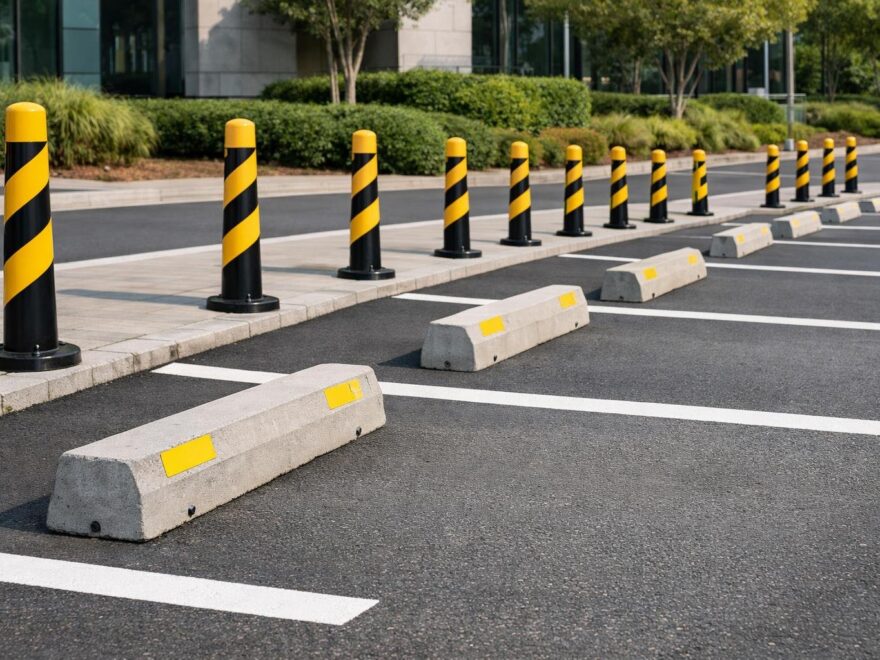
Traffic and Parking Safety, Things You Never Thought Of..
Parking lots and driveways face constant risks from vehicle collisions. Drivers get distracted, spaces get tight, and high-traffic conditions only add to the chaos.
Bollards are vertical posts that control vehicle access and protect people, buildings, and infrastructure from accidental or intentional vehicle impact. Bumper blocks, on the other hand, are horizontal barriers that prevent vehicles from going too far into restricted areas.
Together, these safety solutions help reduce property damage and prevent injuries. They also manage traffic flow in commercial properties, public spaces, and private facilities.
You see these protective barriers every day outside banks, shopping centres, and office buildings. Most people don’t know their technical names or exactly how they work.
Both bollards and bumper blocks serve critical roles in keeping spaces safer by creating clear boundaries between cars and protected zones. They come in all sorts of designs, from fixed steel posts for permanent security to removable options for flexible access.
If you want to pick the right protection for your property, it helps to know the different types, materials, and uses. Whether you’re protecting pedestrian walkways, building entrances, or parking lot access, you’ll need to think about impact resistance, visibility, installation, and maintenance.
Understanding Bollards and Bumper Blocks

Bollards are vertical posts that control vehicle movement and protect pedestrians and property. Bumper blocks are low concrete barriers that stop wheels from rolling forward.
These two tools play different roles in managing traffic flow and preventing damage in parking areas.
Key Differences Between Bollards and Bumper Blocks
Bollards stand upright, usually 36 to 48 inches tall, and create a physical barrier between vehicles and protected areas. You’ll see them guarding entrances, walkways, and storefronts.
Bumper blocks sit horizontally on the ground at the end of parking spaces. They’re about 6 feet long and 6 to 9 inches high. These blocks stop your front wheels before you hit walls, curbs, or other cars.
Installation is different for each. Bollards can be embedded in the ground or surface-mounted to concrete. Bumper blocks attach directly to pavement with anchors or adhesive.
Bollards can take impact from any direction. Bumper blocks only work if a vehicle approaches head-on.
Roles in Traffic and Parking Lot Safety
Parking lot bollards protect high-risk spots from vehicle intrusion. You’ll want them near building entrances where drivers might misjudge a turn or lose control.
They set boundaries between driving lanes and pedestrian zones. Bumper blocks prevent parking-related damage by stopping your vehicle before it hits something you shouldn’t.
They help keep cars in their proper spots. Both tools help property owners reduce liability.
Bollards stop cars from crashing into storefronts or utility equipment. Bumper blocks help keep parked vehicles from overrunning sidewalks, landscaped edges, and other assets.
Common Materials and Design Features
Most bollards use steel or stainless steel for strength and impact resistance. Fixed bollards stay put, while removable and collapsible versions let you control access.
Diameters range depending on how much protection you want. Bumper blocks are usually precast concrete, reinforced with steel rebar, though rubber and recycled plastic versions are also common.
The material needs to stand up to repeated vehicle contact. Yellow paint or reflective stripes make them easier to see.
Bollards often have reflective tape for nighttime visibility and bright finishes like yellow or red. These coatings resist rust and weather.
Locking systems on removable bollards keep them secure but flexible for deliveries or emergencies.
Types of Bollards for Traffic and Parking Safety

Different bollard types handle specific jobs in parking lots and traffic areas. Some give permanent protection at entrances, while others allow flexible access control.
The material, installation, and visibility features all play a part in which bollard makes sense for your situation.
Fixed Bollards and Their Uses
Fixed bollards are anchored for good and give the strongest defense against vehicle impact. These are your go-to for constant protection at storefronts, entrances, utility spots, and walkways.
You have a few material options:
- Steel for the toughest impact zones
- Concrete for durability and lower cost
- Stainless steel if you want to resist weather outdoors
Fixed bollards keep unauthorized vehicles out of restricted areas. They shield utility meters, loading docks, and building corners from accidents.
To install, you drill into concrete or asphalt and secure the bollard with anchor bolts or embed it in a foundation. A bollard cover can improve how they look and add reflectivity.
These covers slide on and come in different colours, so you can match your property’s style or meet safety expectations.
Removable and Retractable Bollards
Removable bollards give you flexible access for places that need occasional vehicle entry. You can pull these bollards out of ground sleeves when deliveries or service vehicles arrive, then put them back for security.
Lock mechanisms keep them in place when installed. You lift them out with a key or tool.
This setup works well for parking lots with changing access needs, or event spaces needing temporary barriers. Retractable bollards fold down into the ground instead of being removed.
Some models are manual, unlock and push them down. Automatic bollards use motors so you can raise or lower them with remotes or sensors.
Use removable bollards for driveways, private roads, and parking areas where access changes. Retractable ones are better for high-traffic spots that need frequent access changes.
Flexible and High-Visibility Safety Bollards
Flexible bollards bend if a car hits them and pop back up. They’re made from polyurethane or reinforced plastic and absorb impacts in areas where little bumps happen a lot.
High-visibility safety bollards use bright colours and reflective materials to guide traffic. Yellow, orange, and red are common choices.
Reflective tape or bands help drivers spot them at night. You’ll want flexible bollards in places like:
- Parking lot lane dividers where cars often brush against posts
- Pedestrian walkways next to traffic
- Temporary construction zones that need frequent changes
These bollards are cheaper to maintain than fixed ones since they don’t crack under normal impact. They guide traffic and reduce damage to both cars and bollards.
Their flexibility lets them take repeated hits from shopping carts, car doors, and minor vehicle contact without breaking.
Bumper Blocks: Features, Types, and Benefits

Bumper blocks are the front line between vehicles and property in parking areas. These wheel stops come in three main materials: concrete, recycled plastic, and recycled rubber.
Each has its own pros and cons for safety and protecting your stuff.
Concrete, Rubber, and Plastic Bumper Blocks
Concrete blocks usually weigh 150 to 250 pounds for a standard 6-foot section. You’ll need at least two people or some heavy machinery to install them.
They work well in many settings but can crack if the weather freezes and thaws a lot. Recycled plastic bumper blocks weigh far less for the same size.
One person can carry and install them without equipment. The colour goes all the way through, so you never have to repaint.
They’re also resistant to salt, oils, moisture, and chipping. Recycled rubber options are in the middle and offer a bit more give.
They flex to fit uneven pavement and absorb impacts without breaking. Many have reflective tape moulded in for better nighttime visibility.
Applications in Parking Lot Organization
You use bumper blocks to mark the end of each parking space and stop cars from pulling too far forward. They protect sidewalks, landscaping, building walls, and other vehicles from damage.
Shopping malls, apartment complexes, schools, and commercial properties use these barriers every day.
Blue blocks may identify accessible spaces depending on the site layout and striping plan. Red and yellow are also used in some properties for visibility and parking control.
Lighter plastic and rubber blocks are simple to move if you ever need to rearrange your parking layout for events or seasonal changes.
Preventing Vehicle Roll and Asset Protection
Parking blocks stop vehicles from rolling forward if drivers overshoot their stopping point. This saves money by preventing damage to your building facades, utility gear, and storefront windows.
The barriers also help keep vehicles from creeping into pedestrian space behind or in front of a stall. You lower your liability risk when drivers can’t accidentally push into protected areas.
A physical barrier gives you more security than painted lines alone. Lighter plastic and rubber blocks cause less vehicle damage than concrete but still protect your property.
Enhancing Safety and Security in Parking Areas

Parking areas need physical barriers to protect people and control where vehicles go. The right equipment stops accidents and creates clear boundaries between cars and safe zones.
Pedestrian Walkways and Protection
You have to separate vehicles from walking areas in your parking lot. Parking bollards are short vertical posts that stop cars from entering spaces where people walk.
These posts guide drivers away from sidewalks, entrances, and crosswalks. When you install them along pedestrian paths, people get a safer route through the lot.
Lots without barriers put people at risk every time they walk to their cars. Posts act as a shield between moving vehicles and foot traffic.
You can space them out so vehicles can’t get through, but people still can. Materials like steel and concrete give the strength needed to stop a wayward vehicle.
The height and visibility of these barriers remind drivers to stay in their lane and out of walking zones. This lines up with Niagara Falls site planning guidance that calls for separating vehicular and pedestrian traffic and minimizing the need for people to walk through parking areas.
Access Control and Traffic Flow Management
You can use different bollard types to control which vehicles enter certain areas and when. Fixed bollards make permanent barriers that keep vehicles out of restricted spots.
Removable options let you open or close access as needed. Automatic and retractable bollards give you flexible control over entry points.
These systems drop into the ground to let authorized vehicles through, then pop back up to block access. Your parking area flows better when you use these barriers to direct traffic along specific routes.
They stop shortcuts through restricted zones and keep delivery trucks, employees, and visitors in the right places. Gate arms can work alongside bollards to manage entrances and exits.
Barriers also protect things like utility boxes, charging stations, and building corners from accidental vehicle contact. In practical terms, that same logic shows up in Ontario farm fire-safety guidance too, which specifically recommends vehicle protection bollards when equipment is close to driveways or parking lots.
Crash-Rated and Security Bollards
Some parking areas need real protection against deliberate vehicle attacks or high-speed impacts. Crash-rated bollards go through formal testing to prove they can stop vehicles at certain speeds and weights.
These products make sense in spots where you want maximum protection. You’ll often see them around storefronts, building entrances, and outdoor dining areas to keep vehicles out.
The rating system spells out exactly what size vehicle and speed each bollard can handle. Standard decorative bollards might look similar, but they just don’t have the inner strength or deep foundations needed to stop a determined or out-of-control vehicle.
Consider crash-rated options if your parking area sits near crowded spaces or buildings with lots of people inside.
Installation, Maintenance, and Compliance

Proper installation needs careful planning for traffic flow and site conditions. Regular upkeep stretches equipment life and helps you avoid expensive failures.
Meeting accessibility and site design standards protects your organization and the people using your facilities.
Best Practices for Installation
Plan bollard and bumper block placement based on your site’s traffic patterns and hazards. Professional installation crews handle the entire process and make sure everything lasts. Start by identifying where vehicles and pedestrians cross paths, think building entrances, loading zones, and walkways.
For fixed bollards, you need the right foundation depth for your soil and expected impact loads. Most jobs require concrete footings that go below the frost line so nothing shifts later. Retractable or collapsible bollards work well in spots where you sometimes need vehicle access for maintenance or deliveries.
Bumper blocks should sit flush with the pavement and line up perpendicular to parking spaces. Space them to match your stall layout, but leave enough room for doors to open. Watch sight lines when placing equipment near intersections or blind corners.
Placement planning should also account for pedestrian circulation, general parking layout, driveway movement, and accessible parking routes, all things Niagara Falls flags in its site plan and traffic review material. Always mark utility lines before digging.
Maintenance and Longevity Considerations
Steel bollards need periodic checks for rust, structural damage, and loose mounting hardware. Touch up paint where the coating’s worn off. Inspect concrete bases for cracks that could mess with stability.
Bumper blocks need less work but still deserve regular cleaning and inspection. Watch for concrete deterioration, missing reflective tape, or loose mounting bolts. Replace any that show a lot of cracking or have shifted out of place.
Hydraulic and mechanical bollards need more attention. Lubricate moving parts as the manufacturer recommends. Test raising and lowering mechanisms every month to catch problems early. Emergency release systems require verification to make sure they work during power outages.
Keep maintenance logs with inspection dates, repairs, and replacement parts. This record helps you track performance and plan for future needs. Schedule professional servicing for complex systems at least once a year.
Accessibility and Legal Requirements
Your bollard and bumper block setup should support accessibility instead of creating new obstacles. In Ontario, that means thinking about clear pedestrian routes, accessible parking, and the design of public spaces, not just vehicle control.
Bollards shouldn’t choke down accessible exterior paths or force wheelchair users into traffic. Clear width, sight lines, and logical walkway connections matter.
Colour contrast helps people with low vision spot obstacles. Paint bollards in colours that pop against pavement and nearby structures. Reflective tape or covers boost visibility at night or in bad weather.
Double-check your installation against local building codes, fire access rules, and site planning guidance. Some layouts also need to account for accessible parking dimensions, pedestrian separation, and traffic circulation requirements. Document your compliance with site plans, inspection records, and accessibility reviews.
Frequently Asked Questions

Choosing the right traffic control gear really comes down to knowing your site, understanding how different materials perform, and following the rules. Spacing and installation methods matter a lot, they directly affect how well these devices protect people and property.
How do I choose between fixed, removable, and collapsible bollards for a specific site?
Fixed bollards make sense when you want permanent protection and never need to let vehicles through. They’re always there, offering the strongest barrier against vehicle impact.
Removable bollards work for areas where you sometimes need vehicle access for deliveries, maintenance, or events. You can pull them out and put them back in pretty quickly. Parking lot bollards designed this way let you keep security but still have flexibility.
Collapsible or flexible bollards bend if a car hits them and pop back up afterward. They’re great in tight spaces where drivers might occasionally clip them. These bollards help reduce vehicle damage while still marking boundaries and keeping pedestrians safe.
What spacing and placement guidelines help prevent vehicle encroachment while maintaining pedestrian access?
Space bollards carefully enough to stop vehicle entry while still preserving a comfortable pedestrian opening. The exact gap depends on the use, but the principle is simple: prevent cars from squeezing through while keeping walking routes obvious and usable.
Place bollards with enough setback from curbs, corners, and building edges so pedestrians don’t feel pinched. For bike routes and walkways, use bollards to clearly define where vehicles should not go.
Entry and exit points need wider spacing or removable bollards so authorized vehicles can get through. Mark these spots clearly so drivers know where they’re allowed to enter.
Which materials and finishes offer the best durability and corrosion resistance in outdoor installations?
Steel bollards with powder-coated finishes hold up against rust and keep looking good for years. The powder coating forms a tough barrier against moisture and salt. Galvanized steel adds another protective layer before you even get to the finish coat.
Stainless steel is pricier but barely needs maintenance and shrugs off harsh weather without corroding. It’s a smart pick near water or in places that use a lot of road salt.
Concrete-filled steel bollards bring together impact strength and weather resistance. The concrete core adds weight and stability while the steel shell keeps out the elements. Cast iron bollards look classic and resist rust naturally, but they’re heavy and cost more to install.
What installation methods are recommended for concrete, asphalt, and paver surfaces to ensure long-term stability?
For concrete, core drill holes deep enough for solid anchoring, usually well below surface level for embedded posts. Pour new concrete around the base and let it cure completely before the bollard takes any hits.
With asphalt, cut through the top layer and dig into the base material underneath. Never anchor bollards just in asphalt, it can’t hold up to impact. Dig down to stable soil or concrete and pour a proper footing.
For paver surfaces, remove the pavers in your installation area and dig below. Pour a concrete footing that goes beneath the frost line. Once the bollard’s set, cut pavers to fit around the base or leave a gravel collar for drainage.
Surface-mount bollards bolt down but don’t offer as much impact resistance as embedded posts. Only use them in low-risk spots where you mostly need a visual cue, not a physical barrier.
How do bumper blocks compare to curbs or wheel stops in protecting buildings, sidewalks, and parked vehicles?
Bumper blocks sit right in parking spaces and stop vehicles before they hit walls, posts, or other cars. They’re cheaper than curbs and install quickly on many surfaces. If your parking layout changes, you can move or replace them without much hassle.
Curbs make more permanent barriers that define parking areas and protect landscaping or pedestrian zones. They cost more to put in but last longer and often tie into broader site drainage and layout decisions.
Wheel stops work a lot like bumper blocks but sit lower to the ground. They stop forward rolling without being a big obstacle. Sometimes drivers miss lower-profile stops, which means cars might go over or around them.
Pick based on whether you want flexibility or a more permanent fix. Bumper blocks are easier to move if you need to change things up, while curbs usually stay put and become part of the lot design itself.
What visibility and compliance considerations apply to traffic delineation devices in parking lots and drive lanes?
All traffic control bollards should be easy for drivers and pedestrians to see. Paint them in bright colours like yellow, white, or red so they stand out against pavement and nearby structures.
Stick reflective tape or strips where headlights will catch them. That way, drivers see them in low light, rain, or snow.
Make sure visibility features stay in good shape over time. If reflective material looks worn, replace it before it becomes a surprise obstacle in the dark.
Local site design rules also matter. In Niagara-area development guidance, things like pedestrian separation, parking layout, sight lines, accessible parking, and driveway circulation all affect where delineation devices should go and how visible they need to be.